When the Stream Ends and Real Life Begins: The Weird In-Between Space Streamers Actually Live In

There's a specific kind of panic that hits a streamer when someone across a coffee shop tilts their head, squints a little, and says — just loud enough — "Wait, are you...?"
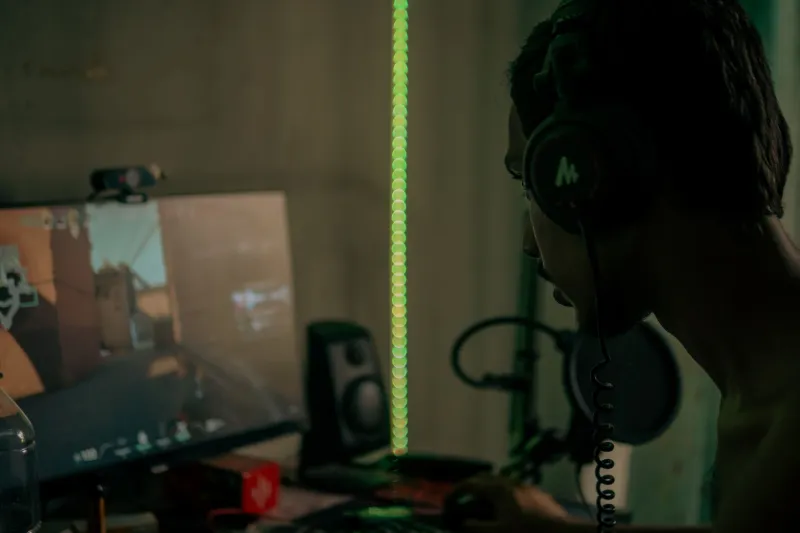
It's not fear exactly. It's more like the sensation of two worlds colliding without warning. The version of you that exists inside a camera frame, lit perfectly, mic levels balanced, chat scrolling at exactly the right pace — that version just got spotted buying a breakfast sandwich in a wrinkled hoodie. Welcome to the strange new reality of being a live entertainer in a world where your audience is everywhere.
The Persona Is Real. So Are You. Somehow Both Are True.
Here's the thing that makes live streaming different from almost every other form of entertainment: the persona is never fully fictional. Actors play characters. Musicians step into stage versions of themselves. But streamers? They mostly show up as themselves — or at least a version of themselves that's been gently optimized for an audience.
That optimization is subtle. Maybe you're funnier on stream. More patient. More animated. You laugh louder, react bigger, and somehow always have something interesting to say. Over time, your audience builds a relationship with that version of you — and they believe it's the whole picture.
The psychological tension here is real. Research on parasocial relationships — the one-sided emotional bonds audiences form with performers — suggests that fans genuinely feel like they know their favorite streamer. They've spent dozens, sometimes hundreds of hours watching this person exist in real time. That feels intimate. And when they meet you in person, they're expecting the person they've been watching.
What they get instead is a human being who maybe didn't sleep great last night.
Why Recognition Hits Different in the Live Streaming World
Being recognized in public isn't new. Celebrities have dealt with it forever. But there's something uniquely layered about it when you're a live streamer, specifically because your audience didn't consume a finished product — they watched you live.
A fan who loves a TV show has seen edited, produced, polished content. A fan who watches your Tuesday night gaming stream has seen you spill a drink, argue with your internet connection, and go on an eight-minute tangent about your complicated feelings about Chipotle. That's a different kind of familiarity. It's closer to knowing someone than watching someone.
So when that fan stops you at a Target in suburban Ohio, they're not approaching a celebrity. In their mind, they're approaching someone they've hung out with — someone who once laughed until they nearly fell out of their chair on stream, someone who answered their chat message once and it made their week.
For the streamer, though, it's a stranger. A kind stranger, usually. But a stranger.
The Performance Instinct Kicks In Whether You Want It To or Not
Ask almost any mid-level or larger streamer about their first few IRL fan encounters and they'll describe the same thing: an involuntary switch flipping. Suddenly they're on. The energy goes up. The voice gets a little bigger. The jokes come faster.
It's not fake, exactly. But it's not fully natural either. It's the muscle memory of performing, activating in a context where you didn't necessarily sign up to perform.
The problem is that this reflex, while understandable, can actually make things worse in the long run. Fans who've been watching you for a long time can sense when you're doing the stream thing versus when you're just being a person. And ironically, being real with them — even if that means being a little awkward, a little tired, a little less funny than you are at peak performance — tends to land better.
Streamers who've found a healthy groove with public recognition often talk about giving themselves permission to be genuinely off-duty. That means it's okay to say "I'm kind of exhausted right now, but it's really cool to meet you" instead of launching into a greatest hits compilation of your on-stream personality.
Setting Limits Without Sounding Like a Jerk
Boundaries are a loaded word in creator culture, but they matter more here than almost anywhere else. Because the live streaming format creates such a strong sense of access and intimacy, some fans struggle to understand why those limits should exist offline.
If you've spent three years watching someone eat dinner on stream, it might feel perfectly normal to approach them while they're eating dinner in real life. To the streamer, those are completely different situations — one is a performance, one is a private moment. Bridging that gap gracefully is genuinely hard.
Successful streamers tend to build this understanding into their content before they ever need it IRL. They talk openly on stream about the difference between their streaming life and their personal life. They model what healthy fan interaction looks like. They don't make it weird or dramatic — they just normalize the idea that there's a version of them that belongs to the audience and a version that doesn't.
That groundwork pays off. Fans who've heard a creator talk honestly about their own humanity tend to be more considerate when they encounter them out in the world.
The Streamers Who Get This Right Have Something in Common
Look at the creators who seem most comfortable with their own public presence and you'll notice a pattern: they're not performing consistency, they're actually living it. Their on-stream personality isn't a dramatically heightened character — it's a genuine expression of who they are, just in a context that happens to have an audience.
That alignment makes the IRL encounter less of a collision and more of a continuation. When a fan meets them at a convention or a coffee shop, the person they find isn't shockingly different from the person they've been watching. There's no jarring gap to reconcile.
This is harder to achieve than it sounds. The incentives of live streaming — engagement metrics, subscriber counts, algorithmic favor — push creators toward more performative, more reactive, more extreme versions of themselves. Resisting that pull while still building an audience takes real self-awareness.
But the streamers who do it seem to carry their public presence more lightly. They're not dreading the moment someone recognizes them. They're not calculating how to respond. They're just a person, having a conversation, with someone who happens to already like them.
Why This Matters Beyond the Awkward Moment
The streamer-fan dynamic in public spaces is actually a pretty good lens for understanding something broader about live entertainment culture. We've built platforms and formats that create genuine emotional connection at scale — and then we haven't really thought through what happens when that connection steps outside its original container.
For audiences, the takeaway is simple: the person you love watching is a real human being with a life that extends past their streaming hours, and that life deserves the same consideration you'd give any stranger you bump into.
For creators, it's a little more complex: the audience you build is partly a reflection of the version of yourself you put on screen. Build something true, and the gap between your online and offline self gets smaller. Smaller gaps mean fewer awkward moments, fewer identity collisions, and — maybe most importantly — an audience you're actually glad to run into.
Even at a Trader Joe's. Even in the wrinkled hoodie.