A Thousand Eyes, Zero Pulse: Why Your Viewer Count Is Lying to You
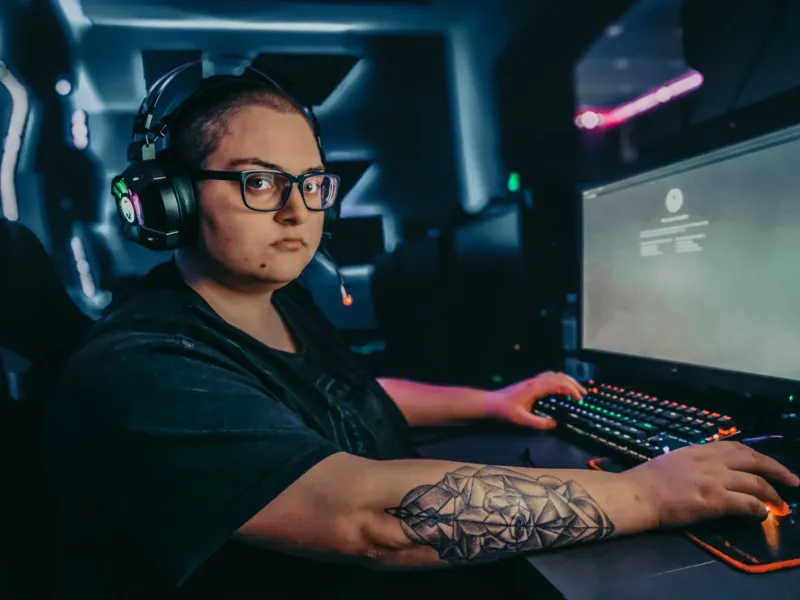
You've seen the number. Four digits. Maybe five. The kind of viewer count you dreamed about when you were streaming to your roommate and a bot named CoolDude99. And yet somehow — impossibly — it feels worse than those early days. The chat moves in slow, mechanical scrolls. Nobody's reacting. Nobody's arguing. Nobody's asking you anything. You crack a joke and it vanishes into the void like it was never said.
Welcome to phantom engagement. It's more common than the streaming community likes to admit, and it's quietly eating creators alive.
The Number That Doesn't Mean What You Think
Viewer count is the metric everyone sees first. Platforms put it right there at the top of the screen, bold and impossible to ignore. Sponsors ask about it. Other streamers compare it. You refresh it compulsively at the start of every broadcast.
But here's the thing: a viewer count tells you how many browser tabs are technically open to your stream. That's it. It doesn't tell you if anyone is actually watching, actually listening, actually there in any meaningful sense. A person who opened your stream while scrolling their phone, set it down, and walked to the kitchen to make a sandwich is counted exactly the same as someone who's been in your chat for three hours with a custom emote.
The platforms know this. The analytics dashboards are full of numbers that are easier to inflate than to interpret — concurrent viewers, peak viewership, average watch time. Each one tells a sliver of a story. None of them tells the whole one.
Why Massive Audiences Can Feel Like Empty Rooms
There's a specific kind of dread that comes with high-traffic, low-engagement streaming. Psychologically, it mirrors what performers call "playing to the back of the house" — technically performing for a full venue but unable to feel the audience breathing with you.
Several things create this effect, and most of them are fixable once you understand what's happening.
Traffic without targeting is the most common culprit. If your stream got boosted by an algorithm recommendation, a clip that went semi-viral, or a raid from a completely unrelated channel, you're suddenly in front of people who have zero context for who you are. They're browsers, not fans. They didn't seek you out. They have no emotional investment in whether your run goes well or you faceplant spectacularly. They're just... there.
Passive consumption design is another killer. Some streams are accidentally built for watching rather than participating. Long stretches of silent gameplay, hyper-focused technical content, or a presentation style that doesn't leave room for chat to breathe will produce viewers who watch like they're watching Netflix — quietly, from a distance, without any expectation of interaction.
Bot traffic and follow-farming still exist on every major platform, despite ongoing crackdowns. Some creators have inflated numbers they didn't ask for and can't explain. If you've ever looked at your viewer count and thought "this doesn't feel right," your instincts might be correct.
The Small Stream That Felt Like a Party
Flip the scenario entirely. Think about the last time you were in a stream with maybe forty viewers and it felt electric. Chat moving fast, inside jokes forming in real time, the streamer calling people by name, someone donating five dollars just to say something stupid that made everyone laugh. That stream had more genuine energy than most broadcasts with ten times the audience.
The difference isn't the number. It's the density of connection.
Small engaged audiences create tight feedback loops. The streamer responds to chat, chat responds to the streamer, and viewers respond to each other. It becomes a social event, not a broadcast. The parasocial distance that defines most streaming relationships collapses into something that feels almost like a real room.
This is what phantom engagement is the opposite of. And understanding that difference is the first step toward diagnosing what's wrong with your stream.
Diagnosing the Dead Zone
If your viewer count feels like a lie, start here.
Check your chat-to-viewer ratio. On a healthy, engaged stream, somewhere between 5% and 15% of concurrent viewers will be active in chat at any given moment. If you've got 800 viewers and three people talking, that's a signal. If you've got 80 viewers and twelve people talking, that's a community.
Look at your clip and highlight data. Engaged audiences clip moments. They screenshot, they share, they timestamp things to send to friends. If nobody's clipping your content despite significant viewership, your audience isn't experiencing moments — they're experiencing background noise.
Track follow and sub conversions. A thousand viewers who collectively produce two new followers is telling you something brutal: they came, they saw, they felt nothing strong enough to stay. Compare that against a stream where fifty viewers produce eight new followers, and the story is obvious.
Watch your drop-off curves. Most platforms show you when viewers leave during a stream. A sharp cliff at a certain point usually means something specific happened — or more often, nothing happened. Flat, low-energy segments bleed passive viewers fast.
How to Bring a Dead Stream Back to Life
The fix isn't always dramatic. Sometimes it's as simple as slowing down.
Streamers who broadcast in high-stimulus, high-speed formats often accidentally train their audiences to watch passively. Deliberately creating space — pausing, asking direct questions, addressing chat by name, reacting visibly to what's happening in the room — invites participation rather than just observation.
Other times, the fix is accepting that the traffic you're getting isn't the traffic you want. Turning down raids from unrelated channels, being more selective about cross-promotions, and leaning harder into content that specifically attracts your kind of viewer can actually lower your viewer count while raising your engagement dramatically. That feels counterintuitive until you realize that a loyal audience of 200 is worth more — creatively, financially, and emotionally — than a phantom audience of 2,000.
Some streamers have started treating their chat as a second screen entirely, building content structures that require participation rather than just invite it. Polls, prediction markets, real-time voting, audience-determined decisions. When viewers become agents in the stream rather than spectators of it, phantom engagement doesn't stand a chance.
The Metric That Actually Matters
Here's the honest truth: there's no single number that captures whether your stream is alive. The platforms will keep selling you on dashboards full of data, and sponsors will keep asking about reach, but the streamers who last — the ones who build something real — are the ones who learn to feel the room.
If you finish a stream and you're energized, if your chat has a running joke that started tonight, if someone said something in the last five minutes that made you genuinely laugh — that stream had a heartbeat. Whatever the number said.
Phantom engagement is a symptom. The disease is building for metrics instead of for people. Treat the disease, and the numbers — the ones that actually matter — tend to follow.