Owning the Dark: How Streaming at 3 AM Turned Night Owls Into Loyal Superfans
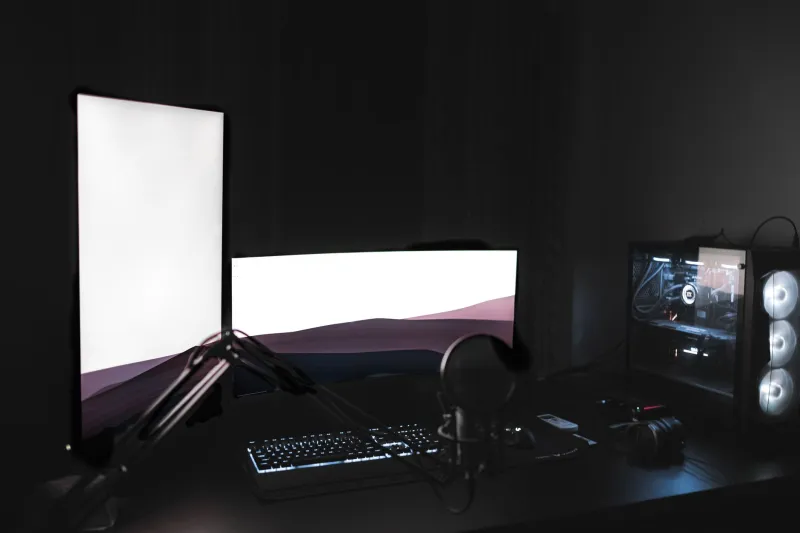
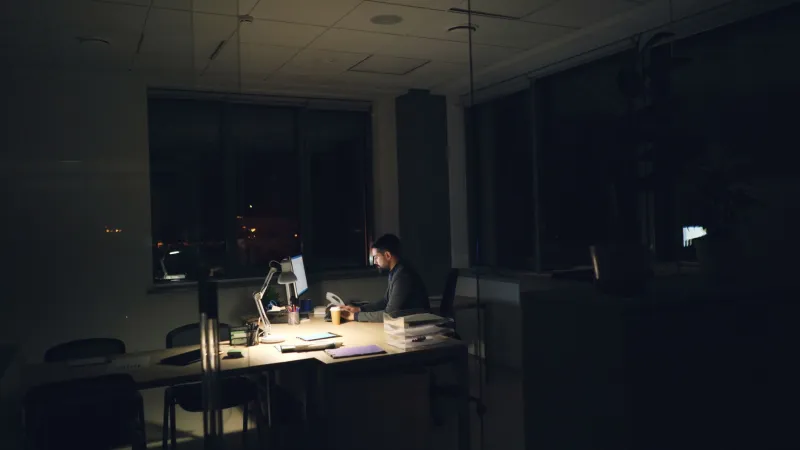
At 3:17 in the morning, most of America is asleep. The streaming competition has clocked out. The algorithm is in a kind of low-hum maintenance mode. And somewhere in a dim apartment with a ring light and a half-empty energy drink, a creator is going live to an audience that — against all reasonable expectations — is completely, intensely devoted to them.
The late-night streaming phenomenon isn't new, but it's been quietly reshaping how a subset of creators think about growth, loyalty, and what it actually means to build a fanbase. The logic sounds backwards at first. Fewer people awake means fewer potential viewers. Fewer viewers means slower growth. Slower growth means less money, less exposure, less everything.
Except that's not what's happening.
The Counterintuitive Math of Off-Peak Hours
Prime-time streaming — roughly 6 PM to midnight in any given US time zone — is a war zone. The biggest names are live. The platforms are surfacing established creators to the widest audiences. Every category is flooded. A new or mid-tier streamer going live at 8 PM on a Friday is one voice in an incredibly crowded room, fighting for algorithmic attention against people with hundreds of thousands of followers and production budgets that dwarf most YouTube channels.
Shift that same stream to 2 AM on a Tuesday, and the landscape changes completely.
Competition thins dramatically. Category pages that are impossible to crack at peak hours become navigable. Discovery becomes a realistic possibility rather than a statistical fantasy. And the audience that's still awake? They're not casually scrolling — they're actively looking for something. They came to the platform with intent.
This is the 3 AM advantage, and it's more structural than it might seem.
Who's Actually Watching at 3 AM
Understanding why late-night streaming works requires understanding who those viewers actually are.
The late-night streaming audience skews toward people whose relationship with time is already a little unconventional. Night-shift workers unwinding after a shift. College students in finals mode. People with insomnia who've exhausted Netflix. International viewers in time zones that happen to align with American overnight hours — places like Southeast Asia, Australia, and parts of Europe where 3 AM Eastern is actually a reasonable evening.
What these groups share, beyond being awake, is a particular kind of receptiveness. They're not in the casual, half-attentive mode of someone watching during a lunch break or a weeknight prime slot. They're in a slower, more intimate headspace. The world has gotten quiet around them. They're not multitasking as aggressively. They're actually there.
Psychologists who study parasocial relationships have noted that the emotional conditions of late night — lowered inhibition, a sense of shared quiet, the feeling of being in a small club of people who are still up — are unusually fertile ground for the kind of deep connection that turns a casual viewer into a genuine fan.
There's a reason late-night radio built some of the most loyal audiences in media history. The medium and the hour conspire to create intimacy that daytime broadcasting rarely achieves.
The Competitive Moat You Didn't Know Existed
Here's something late-night streamers discover quickly: the people who find you at 3 AM feel like they found you. Not like the algorithm pushed you at them. Not like you were impossible to miss because you were everywhere. They stumbled into your stream in the quiet hours and something clicked.
That origin story matters more than it should. Fans who feel like they discovered something tend to develop a sense of ownership over it. They become evangelists. They tell people. They're the ones who show up in the comments of someone else's stream saying "you need to check out this person, I found them months ago and they're incredible."
The late-night discovery creates what you could call a foundational fan — someone whose loyalty is baked into the story of how they found you, not just what you do. These are the people who stick around when you pivot, when you have a bad month, when the content gets weird. They're not fair-weather viewers. They're invested.
For streamers trying to build something durable rather than just chasing numbers, that distinction is everything.
What Successful Late-Night Creators Actually Do Differently
It's not just about when you stream — it's about how you stream for that specific audience and context.
The most effective late-night streamers lean into the intimacy rather than fighting it. They don't perform for a hypothetical massive audience. They talk to the forty people in the room like they're having a conversation, not delivering a broadcast. They remember names. They ask follow-up questions. They let the stream breathe in ways that prime-time content almost never does.
There's also a tonal shift that works well after midnight. The performative energy that drives daytime streaming — high-energy reactions, constant movement, the relentless optimization for clips — softens into something more conversational. More honest. Late-night streams often become the place where a creator's real personality surfaces, unfiltered by the pressure to perform for a massive audience.
That authenticity compounds over time. Regular late-night viewers start to feel like they know the real version of the creator, not the polished daytime version. And that feeling — justified or not — is extraordinarily powerful.
The Time Zone Arbitrage Nobody Talks About
One of the most underappreciated aspects of late-night streaming is the international audience opportunity. A creator streaming at 2 AM Eastern is streaming at a perfectly reasonable evening hour for viewers in the UK, at a late-night-but-reasonable slot for much of Europe, and at a workday morning for parts of Asia.
Creators who build late-night US audiences frequently discover that a meaningful chunk of their most loyal viewers are international — people for whom this streamer is actually a prime-time creator, just in a different hemisphere. This cross-timezone community creates a fascinating dynamic where American night owls and international evening viewers share the same intimate stream space, building community across geography in ways that peak-hour streaming rarely achieves.
The Long Game
Late-night streaming isn't a shortcut to viral numbers. Nobody's getting a million-viewer clip from a 3 AM stream on a Tuesday. But the creators who commit to those hours with genuine intention tend to build something that prime-time streamers often struggle to replicate: a community that feels chosen rather than accumulated.
In a streaming landscape where everyone is chasing the same algorithmic peaks at the same hours, owning the dark is a legitimate competitive strategy. The numbers are smaller. The energy is quieter. But the people who find you there — the ones who were awake at 3 AM looking for something real — have a way of staying forever.