Nobody's Watching and You've Never Been Better: The Late-Night Streaming Paradox
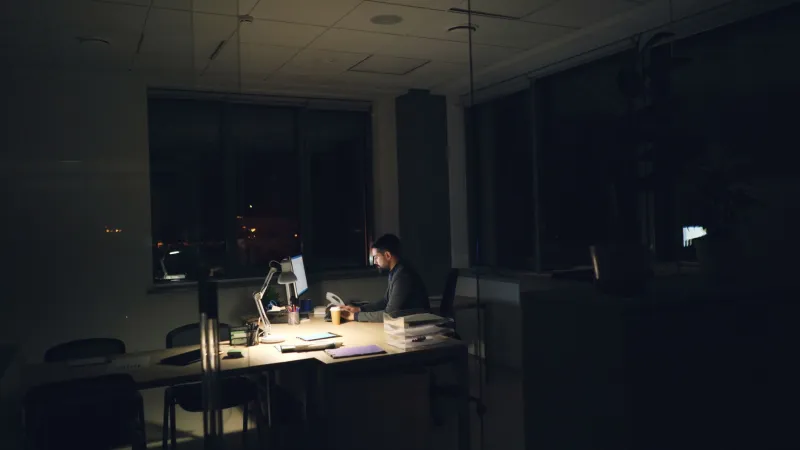
Something happens around 2 or 3 in the morning that streaming analytics can't fully explain. The audience shrinks. The chat slows to a crawl. And yet — ask almost any creator who's been doing this long enough — the content gets better. Looser. More honest. More alive.
It's one of the stranger contradictions in live entertainment: the moments that feel most worth broadcasting are often the ones happening when almost nobody is tuned in.
The Science of Low-Stakes Creativity
There's actual psychology behind this. Research on creative performance consistently shows that reduced self-monitoring — the mental process where you're constantly evaluating how you're coming across — leads to more genuine, spontaneous output. When the audience is small, the internal critic quiets down. You stop performing and start being.
For streamers, a packed chat creates real pressure. Every joke lands or doesn't in front of hundreds of people simultaneously. Every pause gets filled with question marks. That social weight shapes content in ways that aren't always positive — creators can become reactive, chasing what the chat wants rather than following their own instincts.
At 3 AM, with fifteen people watching, that pressure evaporates. What's left is often the truest version of a creator's voice.
The Time Zone Problem Nobody Talks About
Here's the structural issue: most streamers in the US are trying to build audiences in a single time zone cluster, which means prime-time hours are ruthlessly competitive. The 7 to 10 PM window on any major platform is where everyone is fighting for the same eyeballs.
Late-night and early-morning streams, by contrast, are operating in a different competitive landscape entirely. The viewers who are up at 3 AM are fewer, yes — but they're also more dedicated, more likely to engage deeply, and often spread across international time zones where your "dead hours" are actually primetime.
Some creators have quietly built massive overseas followings — particularly in Europe and parts of Asia — precisely because their weird late-night schedule accidentally aligned with those regions' peak viewing windows. What looked like a scheduling problem turned out to be a geographic opportunity.
VOD Culture and the Delayed Audience
The other piece of this puzzle is that live streaming's relationship with time has fundamentally changed. A stream that happens at 3 AM Eastern doesn't only exist at 3 AM Eastern. It lives on as a VOD, gets clipped, gets uploaded to YouTube, gets referenced in Discord servers for weeks afterward.
Creators who understand this shift treat late-night streams not as lost causes but as content investments. The live audience might be small, but the eventual audience — everyone who watches the replay, finds the clip, or gets recommended the highlight — can be enormous.
This requires a mindset shift. Instead of optimizing entirely for live viewership, you start optimizing for how the content will feel to someone watching it twelve hours later. Does it have energy? Does it have shape? Does it tell a story that works outside the moment it was created?
Strategies That Actually Work
So what do the creators who've figured this out actually do differently?
They lean into the intimacy. Small late-night audiences respond to being treated like collaborators rather than spectators. Some creators use these streams for long-form conversations, experimental formats, or content they'd never try during peak hours because the stakes feel lower. That experimentation often produces the moments their audience talks about for months.
They timestamp obsessively. If you're going to have a three-hour late-night stream where the magic happens at the two-hour mark, make sure that moment is easy to find. Chapters, timestamps, and clip-friendly titles aren't just organizational tools — they're how late-night content survives into the next day's conversation.
They communicate the schedule. A surprising number of dedicated fans will actually shift their own sleep schedule — or set a reminder to catch the VOD first thing — if a creator is transparent about when their best content happens. "I stream late but the replays are worth it" is a legitimate brand position, and audiences respect the honesty.
They stop apologizing for the hours. There's a version of late-night streaming that's always framed as a failure — "sorry for the weird schedule, hope some of you can catch this." The creators who thrive in this space own it instead. The late hour becomes part of the aesthetic, part of the identity. It's not a bug; it's a feature.
What 3 AM Actually Teaches You
Beyond the strategy, there's something worth sitting with here. The fact that creativity spikes when the pressure drops isn't just a scheduling insight — it's a comment on what live performance actually costs.
Streaming is exhausting in ways that don't always get acknowledged. The constant performance, the always-on social contract with your audience, the need to be entertaining and consistent and present across hours of real-time content — it takes something from you. Late nights, when the crowd thins and the expectations lower, give some of that back.
The streamers who burn out fastest are often the ones who never let themselves have those low-stakes moments. The ones who last tend to be the ones who found a way to protect their 3 AM energy — and figured out how to share it with the world on a slight delay.
Nobody's watching. You've never been better. That's not a contradiction. That might just be the whole point.