Empty Room Energy: Why the Best Streaming Moments Happen Before Anyone Shows Up
Scroll through any "best of streaming" compilation on YouTube or TikTok and you'll notice something odd. A lot of those clips — the unhinged riffs, the jaw-dropping musical moments, the deeply honest confessions — carry a certain rawness that feels almost accidental. And if you dig into the original stream metadata, you'll often find the same weird footnote: when those moments happened, barely anyone was watching.
That's not a coincidence. It's a pattern, and it's more psychologically interesting than most people give it credit for.
The Pressure Paradox
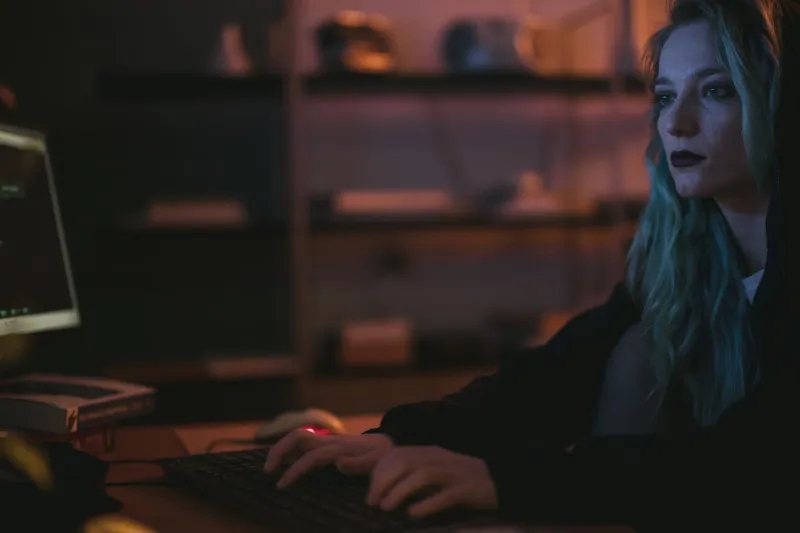
Here's the basic setup: when a streamer goes live and sees three viewers — maybe two of whom are bots and one is their roommate — something shifts in how they carry themselves. The usual performance anxiety dissolves. There's no crowd to impress, no chat moving too fast to read, no donation notifications interrupting the flow. It's almost like rehearsing in an empty theater, except the rehearsal is being recorded.
Psychologists have a name for the broader concept: evaluation apprehension. When people believe they're being closely observed and judged, their performance often tightens up. They second-guess instincts. They self-monitor. For streamers, a packed chat can feel like a hundred tiny judges firing opinions in real time. A near-empty stream removes that noise entirely.
What's left is something closer to play than performance. And play, it turns out, is where the good stuff lives.
The Ghost Stream Phenomenon
Creators who've been doing this long enough have started to recognize what some in streaming communities casually call "ghost streams" — those early sessions where the audience is practically nonexistent but the energy is somehow electric. It's the streaming equivalent of a band's best set happening at a half-empty dive bar in Omaha rather than a sold-out arena.
The irony is thick. Platforms like Twitch and YouTube Live are built around the idea that bigger audiences equal better content. The algorithm rewards viewership numbers. Sponsorship deals are brokered on average concurrent viewers. Everything in the infrastructure of live streaming says that more eyes equal more value.
But the actual quality of the moment? That sometimes runs in the opposite direction.
Small streamers — the ones grinding through Tuesday night sessions with eight viewers and a dream — frequently report feeling more creative, more experimental, and more genuinely themselves during those low-stakes hours. They'll try a bit that would feel too risky in front of thousands. They'll share a story they'd normally keep private. They'll spend twenty minutes going down a rabbit hole that has nothing to do with their "brand" because nobody's there to care about the brand.
Why Those Clips Travel
Here's where it gets really interesting from an entertainment standpoint. Clips harvested from low-viewership streams tend to have a quality that audiences instinctively respond to, even when they can't articulate why. There's an authenticity to them — a lack of polish that reads as honesty rather than sloppiness.
When you watch a creator talking to practically nobody, fully absorbed in what they're doing, something in your brain registers it as real. It doesn't feel produced. It doesn't feel like content. It feels like you accidentally caught a private moment, and that voyeuristic intimacy is genuinely compelling.
This is a huge part of why so many viral streaming clips start with a nearly empty room. The creator wasn't performing for the camera — they were just existing near it. And that difference is detectable.
Social media platforms have essentially become distribution engines for these accidental masterpieces. A clip from a 4-viewer stream gets clipped, posted to Twitter or Reddit, and suddenly reaches two million people who all feel like they discovered something secret. The low-viewership origin becomes part of the mythology.
What This Means for Confidence and Growth
There's a developmental angle here worth paying attention to, especially for newer streamers who obsess over their numbers before they've found their footing. The low-view period — which almost every successful creator has lived through — isn't just a painful waiting room. It's actually a training ground for the kind of comfort and authenticity that audiences eventually fall in love with.
Streamers who survive the ghost stream phase without quitting tend to develop a particular kind of confidence. They've already practiced being themselves when the stakes felt lowest. By the time the audience grows, they've already figured out who they are on camera. The bigger crowd arrives to find someone who's already settled.
Compare that to creators who blow up fast — a viral moment early on, a sudden flood of new viewers — and you'll sometimes see a kind of performance paralysis. They got big before they got comfortable, and the pressure to maintain that audience can make them stiff, calculated, and paradoxically less watchable.
The Audience That Isn't There Yet
There's something almost philosophical about this when you sit with it long enough. The best live streaming moments are often created for an audience that doesn't exist yet — people who will eventually watch a clip of something that happened before they even knew this person existed.
In a weird way, the phantom audience is the most important audience. The three people watching live are almost incidental. The real viewers are the future ones, discovering the clip days or weeks later, completely unaware that the stream was practically empty when it happened.
For a platform culture built around real-time connection and shared moments, that's a genuinely strange inversion. The live experience, stripped of its crowd, produces something that travels further and lasts longer than most carefully produced content ever does.
What Streamers Can Actually Do With This
If you're a creator reading this and currently staring at a viewer count that makes you want to close the laptop — take a breath. The empty room isn't the enemy. It might be the best creative space you'll ever have.
Stop trying to perform at the camera and start just existing near it. Talk to yourself. Follow the weird tangent. Play the song you're not sure fits the stream. Tell the story you've been holding back because it feels too personal or too off-brand.
The people who will eventually care about your content aren't there yet. But the clip that makes them care? That might happen tonight, in a stream with six viewers, when you forget to be self-conscious for a minute and just let something real come out.
At OnlusLive, we talk a lot about streaming every beat in real time — but sometimes the most resonant beat is the one that happens in the quiet, before the room fills up.